My broken windows
My broken windows
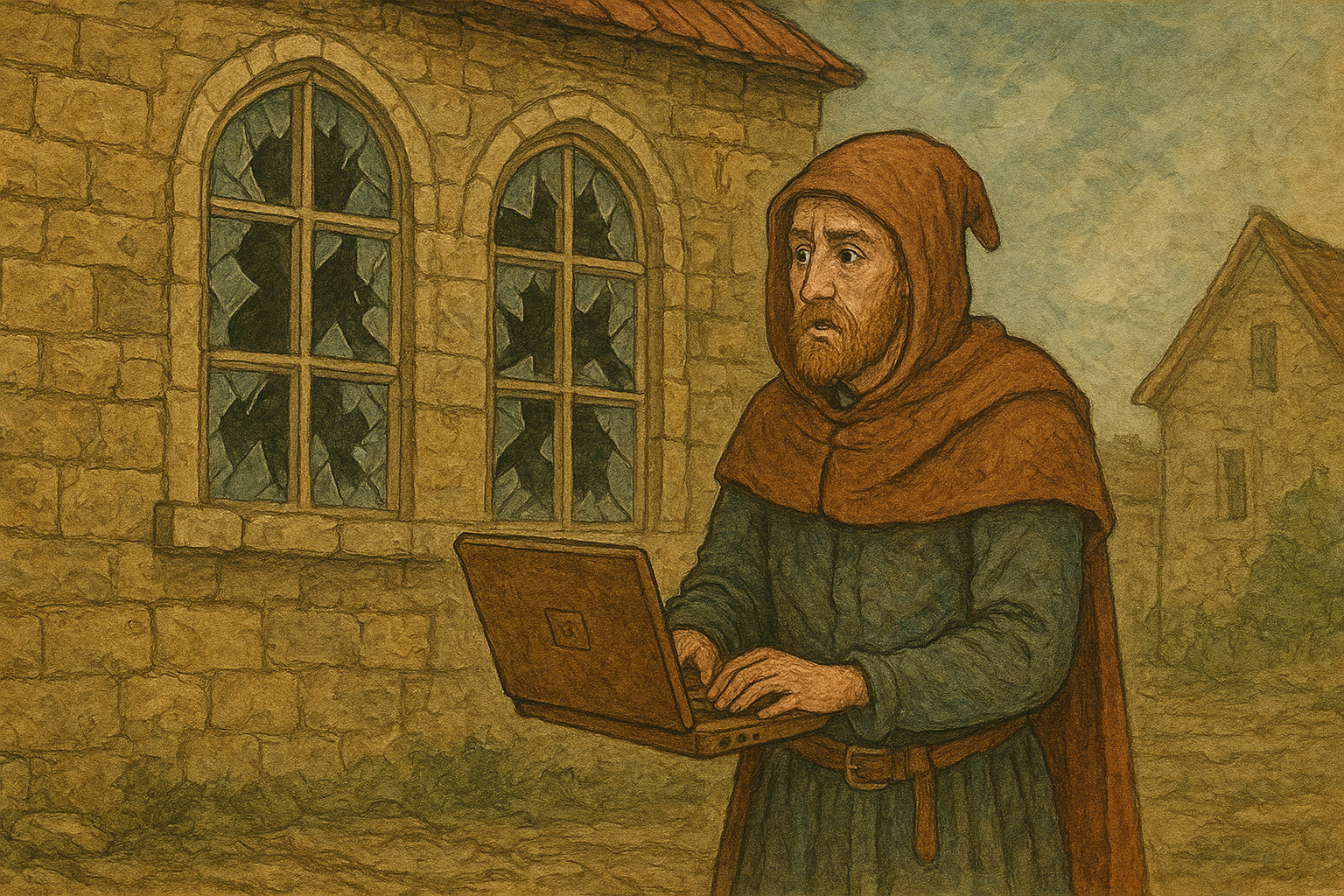
The broken window law
In a book I recently read, I came across a fascinating concept: the broken windows theory.
The idea is simple: if broken windows appear in a social context, over time it will become increasingly likely that more will break.
The author applied this principle to the software world, particularly to copy-pasting suboptimal code. Instead of improving the code, we end up duplicating classes and functions, thinking we're saving time, when in reality we're accumulating technical debt without realizing it.
This theory struck me deeply, because it can be compared to the bad habits we tend to maintain without making an effort to correct them.
As DC wisely said about Jon Jones:
To avoid being too generic, I want to share some of my "broken windows" that I've tried to repair.
The blog
More than a year has passed since my last article (aside from a deployment error yesterday). One of the reasons is that I tried to dedicate more time to university and better manage my free time, but I also believe I took the wrong approach.
I focused mainly on writing purely technical articles: interesting topics, with titles I'm still proud of. However, I think this way the purpose of the blog got somewhat lost. This site is called marcomontorsi.com: anyone who wants to delve into technical or theoretical topics can easily find resources online or ask an LLM, which will provide much more comprehensive answers.
In my opinion, a blog makes sense when it tells personal experiences or opinions. And let's be honest: my blog doesn't have a large audience eagerly waiting for technical articles.
Soft Skills
Until a few years ago, I considered soft skills as secondary, a typical attitude of someone with a very technical background who thinks that specialized competence is everything, diminishing the rest.
Over time, however, I changed my mind: communication within the team is fundamental, and I was able to see the enormous difference between a cohesive group and one that's divided and tense.
Today, in an era where various LLMs have now reached vast technical knowledge, the point is no longer comparison, but how to know how to convey and manage this knowledge.
The model of the technician who ignores the environment and works in isolation is, in my opinion, outdated: a well-organized team, with seniors and juniors collaborating in the right way also thanks to AI, can be up to 5 times more productive than any single lone strong developer.
Intact windows
AI Impact
On this point, I feel I can say that my prediction from a few years ago is still valid, indeed: a well-closed window with double glazing.
Back then I already argued that AI would be a revolution, but that it would mainly automate many processes without replacing us.
I still think so today. In recent times I've tried various models, including Claude Code, really powerful. Yet I've also seen its limits: for a university project in AMPL, for example, it generated continuous hallucinations, probably because there's not enough online material on that language.
On the other hand, when I know what I want to do and have a clear objective, AI helps me write code much faster, increasing productivity. It also allows me to clarify doubts and resolve questions quickly and directly.
Conclusions
I hope the reader doesn't get the impression that I want to promote some kind of "extreme grind" policy, the kind we often see today on social media, where the idea of working to exhaustion is exalted, despising more balanced models like the classic 9-to-5.
On the contrary, what I would like to convey is a different message: I believe we are entering a historical period in which the barrier to entry for learning is lowering enormously. We will have the opportunity to learn much more easily and much faster than in the past.
This opportunity should be seen as a stimulus, not as a burden: we can open ourselves to new skills and new experiences without necessarily falling into the obsession of "doing more at all costs".
And so the metaphor can be closed like this: let's keep the doors open to new opportunities, but leave the windows tightly closed
And i think that with this last reference to windows I can finish the article See you soon :)