AI: Friend or Foe?
Thoughts and reflections on AI and its impact on work and society
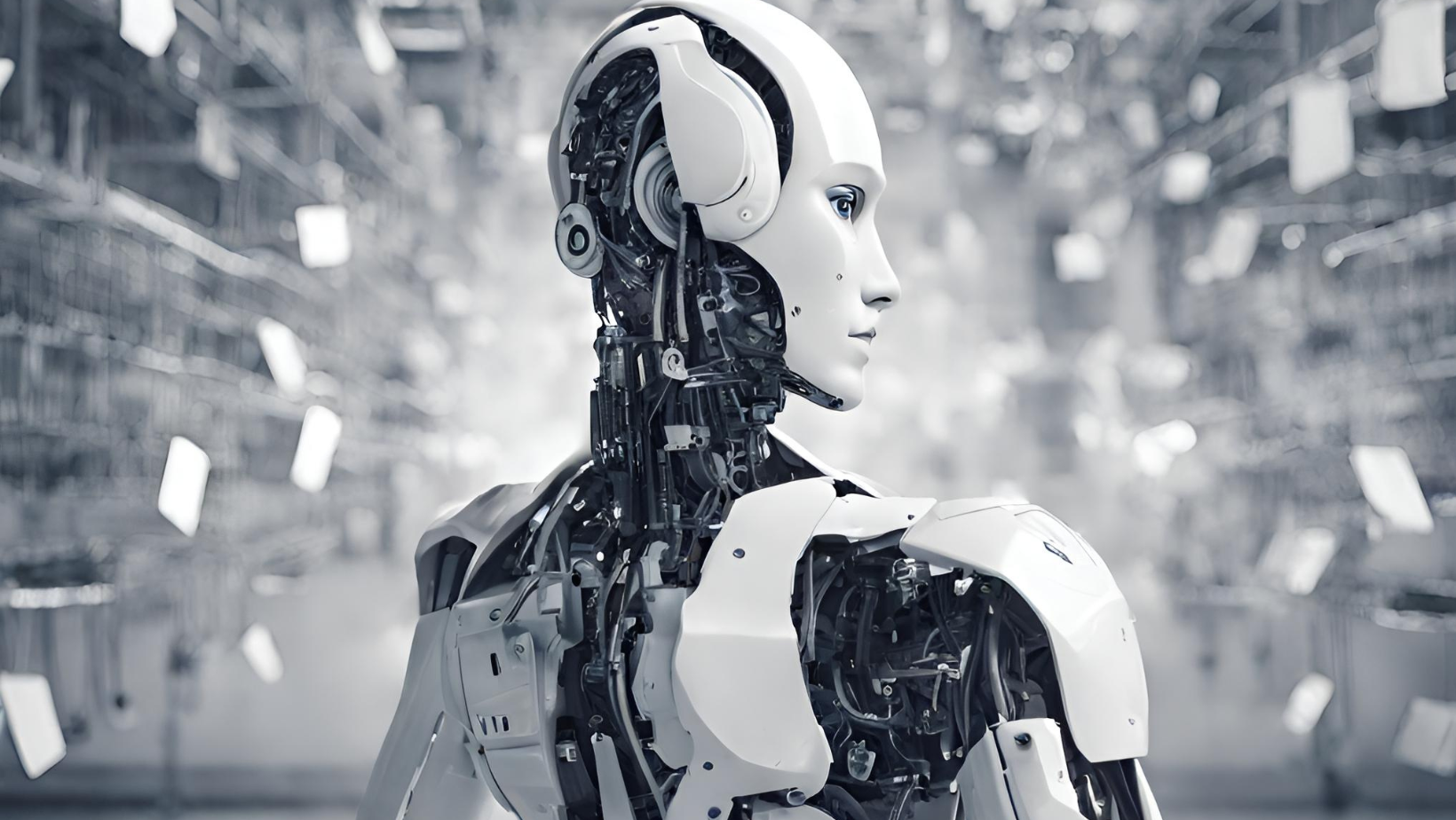
Exploring the Future of Artificial Intelligence
In the technological whirlwind characterizing 2023, artificial intelligence emerges as the protagonist. It's important to emphasize that this is more of a rebirth than a new invention, considering its roots in the past.
As a software engineer, I want to share my reflections on this technology and its impact on the future workforce. It's an uncertain field, and nobody can predict its course with absolute certainty. However, ignoring the potential consequences might turn us into passive passengers on a high-speed train.
AI and the Future of Work
Every major technological discovery revolutionizes society. Now, the crucial question is its impact on the world of work and, consequently, our lives. We can speculate about three scenarios:
The three curves represent potential impacts of AI in the workplace from 2024 onwards. It's evident that since the public release of ChatGPT in November 2022, within just a year, the landscape of the working world has undergone significant changes. Numerous AIs have emerged, enabling text, translation, voice, image, and video generation. Additionally, there have been immediate efforts to regulate this technology, signifying a true revolution. After substantial changes like this, an anticipated period of stabilization usually ensues, allowing various socio-economic sectors time to adapt. So, what can we anticipate in the near future?
A logarithmic or linear impact appears likely in the short to medium term. Thanks to the novel tools provided by AI, we can significantly expedite several processes. However, it's improbable that they will eradicate the majority of work processes. AI relies on models, and despite our ability to enhance their capabilities, they are confined by their structure. An innovation surpassing model training will be necessary, a task far from simple.
Choosing the Path: To Study or Not?
I imagine young individuals grappling with the decision to enroll in university or enter the workforce. The idea of studying for years and then discovering it might not have been necessary can be frightening. However, in an ever-evolving world, the most crucial skill might be adaptability.
Instead of focusing on specific skills, we should foster a constant interest in continuous learning. The flexibility in acquiring new languages or frameworks could become more relevant than deep knowledge of a specific tool. This might seem like a burden, but in the current dynamic context, it is in AI that we can find an ally.
Reflecting on My Work
A significant part of my work involves research and development, previously entrusted mainly to resources like technical documentation or Stack Overflow, a site where developers share questions and solutions. While the nature of research hasn't changed, the method has evolved. ChatGPT appears as an extraordinary tool for basic questions, accelerating research significantly and providing suitable answers promptly. However, posing the right questions is crucial; the provided answers can be only partially correct or even incorrect.
This applies to the free use of ChatGPT, but improvements can be expected in the short term, both for the free and paid versions, making it a valid educational tool.
Professionally, I currently don't use code generation tools except for limited experiences with Github Copilot in beta. I remain cautious about tools that might access my code due to privacy concerns, especially considering the cybersecurity sector, in which I hope to specialize.
Potential Dangers
Excessive reliance on AI can hide a danger: the tendency to think less. Automating some processes should not deprive us of the most crucial aspect of our work: critical thinking. The true essence of technicians, programmers, and engineers lies in the ability to think creatively and efficiently. We don't become engineers just because we use ChatGPT, but we can leverage AI-based tools as an opportunity for learning.
Conclusions
As with any innovation, adaptation is critical. This adaptation has already happened in the past with platforms like WordPress or Shopify for automating blogs and e-commerce, or with the introduction of front-end and back-end frameworks. The use of microservices and serverless architecture has also transformed the application concept. Even though we face a much more significant technological innovation than those just mentioned, the response to such change doesn’t change. What has changed and what will change will require adaptability.
Finally, I'd like to bet on a little-discussed topic but one I consider a next frontier: computer vision. I believe it will significantly change how we interact with technology and create new job opportunities. However, only time will confirm these hypotheses.
After these considerations, I believe it's right to ironize about how far we are from being completely replaced by this new technology: